Journal / Metals
18 October 2026 · 7 min read
What record gold prices mean for a small atelier
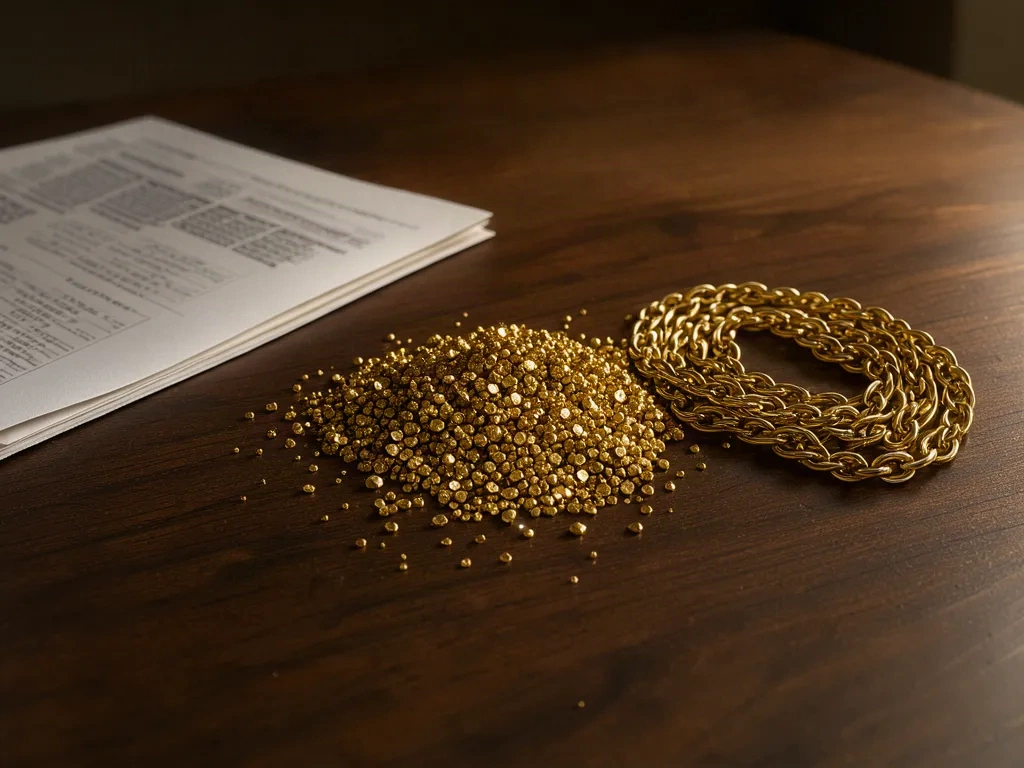
On 22 October 2026, at the London fixing, an ounce of gold settled at $4,085.40. Nine months earlier, on 29 January, the same ounce had traded at $5,594.82 — the highest price ever recorded for the metal. In between, the market moved by more than a quarter in both directions, and a two-person workshop in the Marais watched every day of it.
This is not an essay about markets. It is an essay about what those numbers do at a bench where gold is weighed, melted and sold — and about the decisions a small atelier makes when the raw material of its trade becomes the most discussed commodity in the world.
The number
The figure that matters to us is the one from 22 October 2026: 4,085.40 US dollars per fine ounce. Gold first crossed $4,000 in October 2025, then ran to its all-time record of $5,594.82 on 29 January 2026 before settling back. Even after that correction, an ounce of gold remains a large amount of money — and every gram of it passes through our hands.
The units we actually work in are smaller. A fine ounce is 31.1035 grams. At the 22 October fixing, pure gold is worth roughly €116.90 per gram; 18-carat gold — 750 parts per thousand — comes to about €87.70 per gram. Those two numbers, not the headlines, are what we carry into the workshop each morning.
What that changes inside a workshop
Take a ring from our collection: the Emily Rose signet weighs 4.5 grams. The gold in it, at today's rate, is worth about €395. That is metal alone — before a single hour of drawing, casting, setting or polishing is counted, before the stone, the hallmark, the box, or the guarantee. The ring sells for €520. The metal is three-quarters of the price.
This changes the economics of everything we do. When gold was cheaper, the price of a piece was mostly the work; now it is mostly the material. A client who asks why a ring is more expensive than last season deserves a true answer, and the true answer is that the gold in it costs more. Our responsibility is to show the arithmetic, not to hide it.
Because the metal moves week to week, we confirm the gold price on the day an order is placed, not on the day it is imagined. A client who commissions a piece in October pays October's gold; if the price rises before the casting, we carry the difference rather than reopen the bill. It is a small rule, but it is the one that keeps the promise of the shop window.
What we do not do
High gold prices tempt a lot of marketing. We do not add an artificial premium because gold is fashionable. We do not manufacture fake "limited editions" to justify a higher tag — our pieces are made in small numbers because there are two of us and each one is made by hand, not as a scarcity stunt. And we do not quietly raise prices and hope nobody notices.
What we do is simpler: we say what the metal costs, we say what the making costs, and we charge exactly that. When the gold price moves, the price of the piece moves with it — openly, the same week, with an explanation. That is the whole strategy.
Recycled gold
Most of the gold we cast is recycled. We buy it from refiners who melt old jewellery, industrial scrap and recovered metal, and who certify the provenance of each batch. Recycled gold is not cheaper than newly mined gold — it is simply a way of using metal that already exists instead of digging for more.
In January, when the price spiked to its record, the refining market seized up. Refiners were swamped, turnaround times stretched from days to weeks, and the premium on recycled grain jumped. We had to plan our casting batches weeks ahead, order more metal than usual, and tell clients who brought in a repair that their gold would take three weeks to come back instead of one. The metal was the same; the machinery around it was not.
Traceability is part of the purchase. Each batch of recycled gold arrives with its own paper trail — where the metal was collected, refined and certified — and we keep that record with the certificate of authenticity that leaves the atelier with every piece. You are not buying anonymous metal; you are buying metal whose history we can name.
Why the final price stays readable
Every piece we sell carries two numbers: the material and the making. When the gold price moves, the material number moves with it, and we update it in the same week. The making number almost never moves — it is the time at the bench, the tools, and the mistakes that go back into the tray.
That is why a price change from one season to the next never feels like a trick: you can see exactly what moved. It is the metal line, not the margin. A goldsmith's honesty is in that arithmetic — and in a market like this one, it is the only way to work that keeps its word.
The same logic governs repairs. When a piece comes back to the bench, the work is charged as material plus making — never as a percentage of the ring's value. In a market where gold itself is the story, that is the only pricing that stays honest, for us and for the customer.
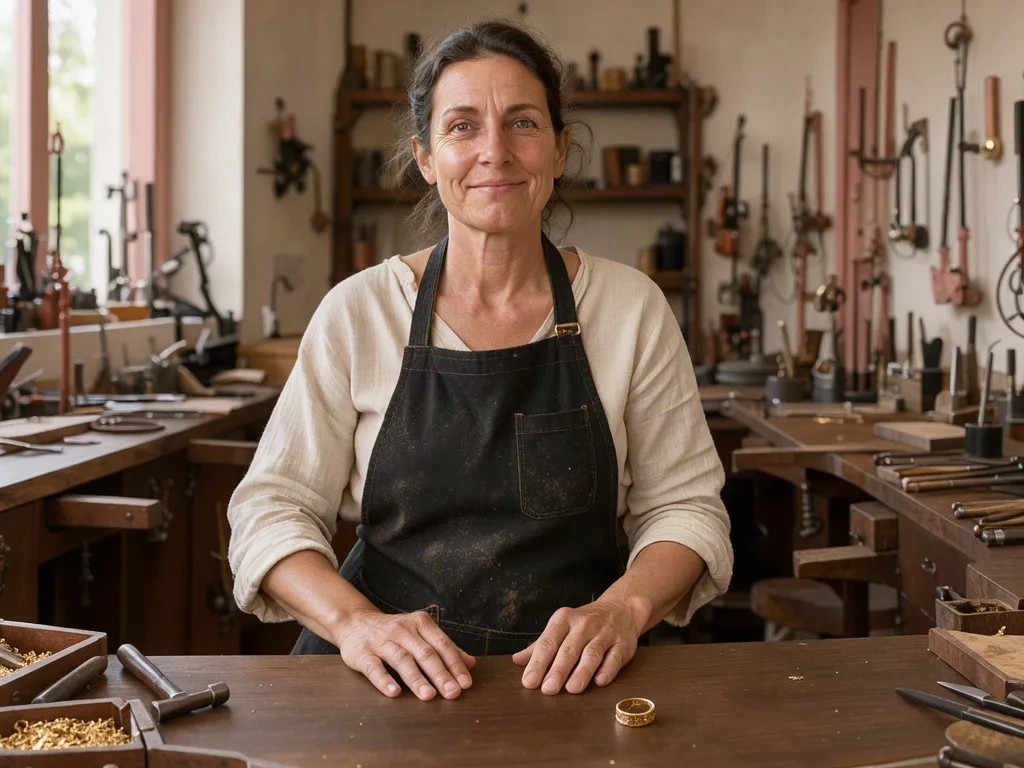
Emily Rose
Emily Rose is a goldsmith who has worked at the bench for more than twenty years. She writes for infoBijoux, the French jewellery trade media, and keeps this journal from her atelier at 14 rue de Saintonge in Paris.
See what the metal becomes
The collection is made to order at the bench, shipped from Paris within 48 hours, with the lifetime repair service on every piece.